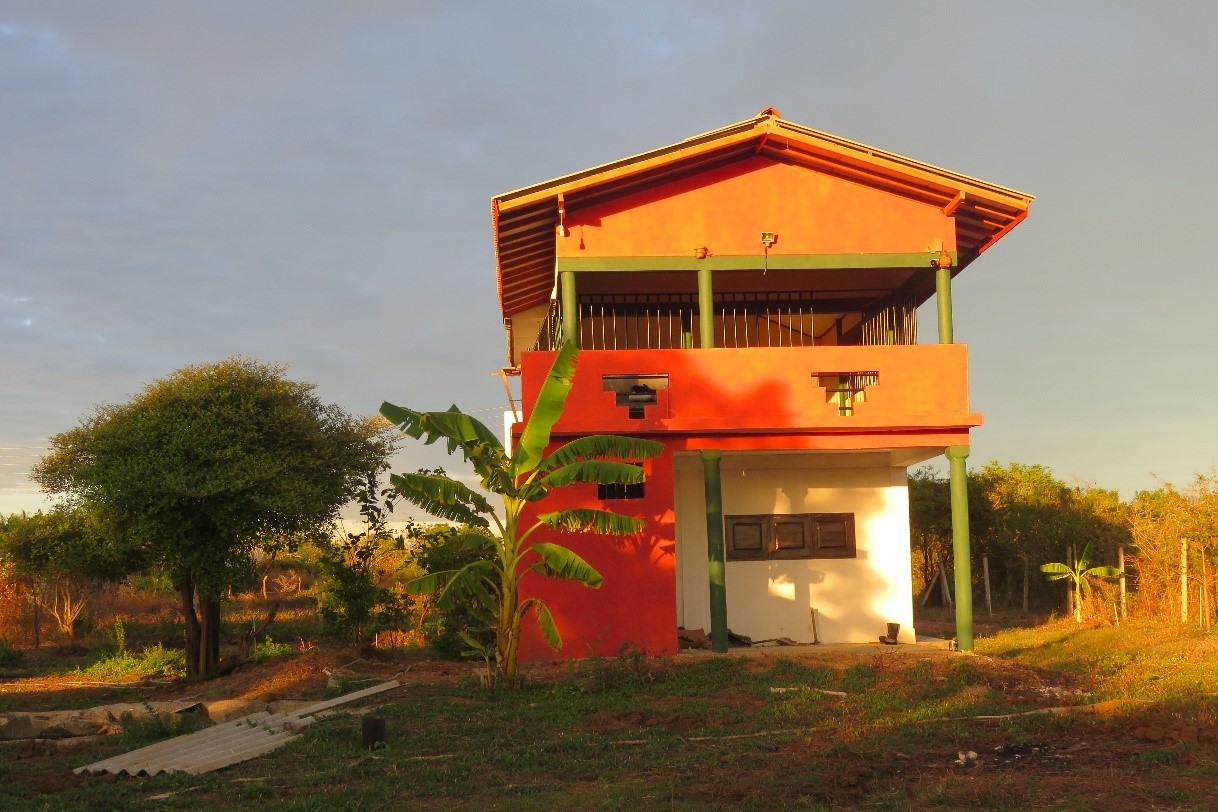
CARE Base Camp
CARE Base Camp is located in Mahapitapelessa, Sooriyawewa, Hambanthota, a location not too far from the Udawalawe, Lunugamwehera, Bundala, and Yala National Parks and Madunagala Wildlife Sanctuary. The area is an ecological hotspot where forest, farmland, and wildlife corridors intersect, making it an ideal setting to study and address human–wildlife coexistence. Located next to the Mahapitapelessa ancient lake and close to the Galwewa Archaeological site, it is a spectacular location embedded in the forest agricultural landscape. The location is also rich in biodiversity and has recorded more than 150 bird species.
Collaborators
The CARE Base Camp is a product of long-term collaboration between TERN and the Memphis Zoo, with additional support from organizations like Dilmah Conservation. Local elders and community members have played a central role in shaping its identity and ensuring that conservation aligns with cultural and social contexts. The centre is open for collaborations and environment-related events.
Facilities
Established within a three-acre land, the centre is around 1 km from the 100 ft road leading to Hambanthota and can be accessed by any vehicle. The centre can accommodate 10 individuals comfortably with roughout facilities for about 25. Equipped with electricity, piped water, 4G network, cooking facilities, and a meeting hall, the center can accommodate residential researchers and provide space for environment-related gatherings and meetings.
Activities and Contributions
• University Engagement: Several universities have already used the facility for undergraduate and postgraduate training, final-year research projects, and practical field courses.
• Research Base: The camp supports ongoing research on large mammals, human–elephant conflict, and biodiversity monitoring using modern tools such as camera traps and drones.
• Community Outreach: Training in sustainable agriculture (organic farming, biochar production) and environmental awareness programs connect local farmers and youth to conservation.
• School Programs: In collaboration with Dilmah Conservation, environmental education programs for schoolchildren foster early connections with nature.
The CARE Base Camp is more than a station, it is a hub where learning, conservation action, and community empowerment intersect.
.png)
.png)